Experiences
Cycling
Hot in the lowlands, cold on the climbs. Ride early, finish by midday.
About
Why Cycling here.
Plenty of operators will sell you a seven to fourteen day island traverse. This page is the part they leave out: what the riding is actually like, so you arrive with the right bike and the right expectations.
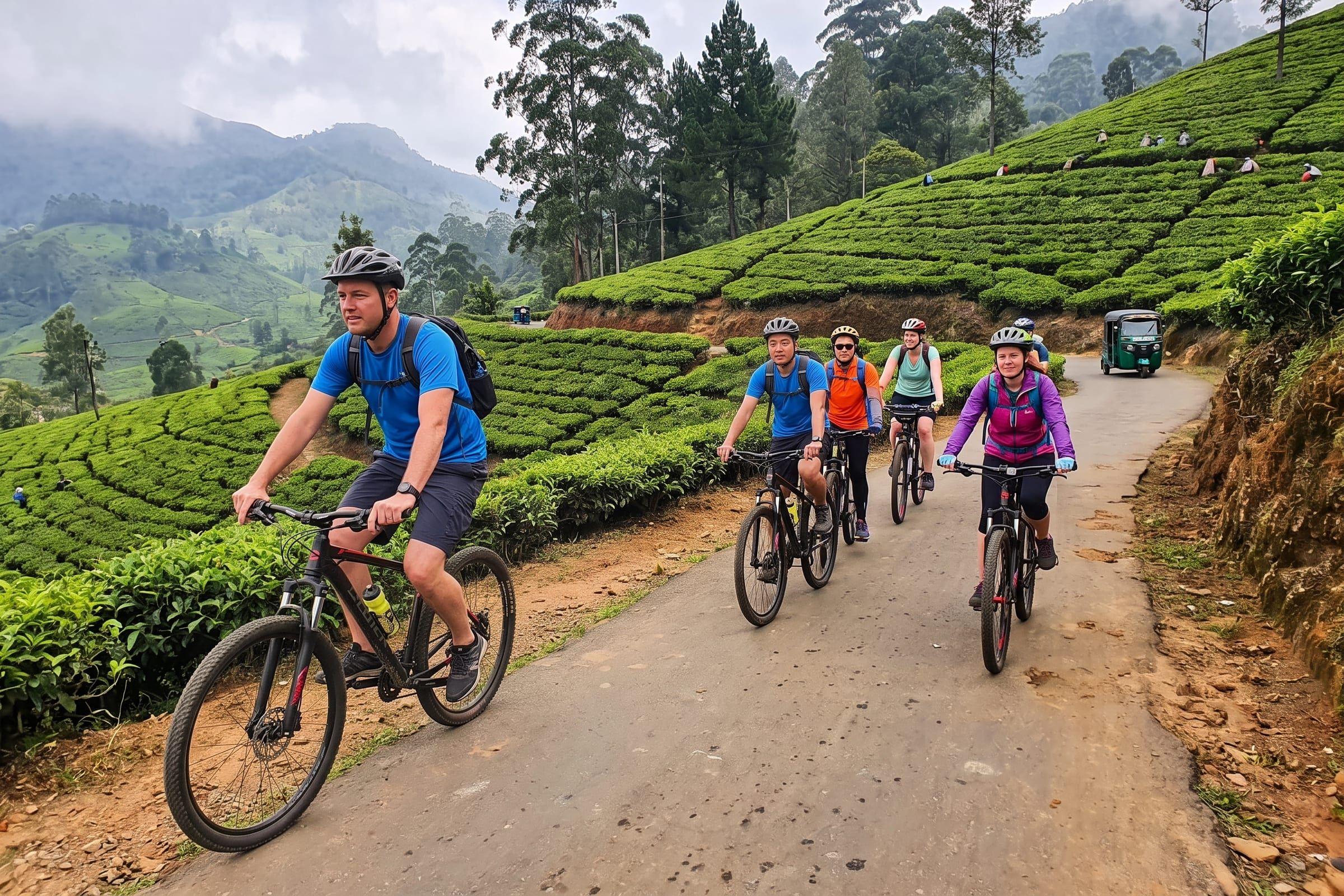
The heat is the main thing. On the coast and through the lowlands it sits between 25°C and 32°C with humidity between 60% and 90%, and that combination drains you far faster than the gradients do. Riders here start at sunrise and are off the bike around midday — not as a preference, as the way it works. The hill country around Nuwara Eliya is the relief: 15°C to 20°C, cold enough at altitude that you want a layer for the descents, which is a surprise to most people on their first trip.
The roads are shared. There are no bike lanes and no purpose-built paths. You ride with buses, tuk-tuks, dogs and school traffic, on surfaces that change without warning. The red gravel tracks are firm and fast when dry and loose, rutted or muddy after rain, and descents throw water bars, loose stone, off-camber corners and the occasional stream crossing at you.
Bike choice follows from that. A gravel bike with room for wider tyres handles the mixed surfaces that a road bike will fight. TODO(client): whether we supply bikes and which models, what tyre width we fit, whether you can bring your own, and what spares and mechanical support ride with the group.
Direction and timing matter more than the distance. December to April is the strongest all-round window if your route takes in the southwest, the cultural triangle and the hills. From May to September the southwest monsoon is on that side of the island and the east is the dry one, so a route that works in February is the wrong route in July. We plan the direction around the month rather than selling one fixed loop.
TODO(client): the routes we run, their daily distances and climbing, group sizes, what the support vehicle carries, where riders stay, and prices from. Nothing is published here until it is confirmed.
Trips
Cycling trips.
The cycling itineraries are being written. Tell us your travel month and group and we will build one — every trip runs on request while its page is finished.
Questions
Before you ask.
- Road bike or gravel bike?
- Gravel, for most routes. Sri Lanka's secondary roads and red gravel tracks reward wider tyres, and the surfaces change too often for a road bike to be comfortable. A road bike is only the right choice on a route planned to stay on sealed main roads throughout.
- When is the best time to cycle in Sri Lanka?
- December to April, if your route includes the southwest, the cultural triangle and the hill country — that is the dry window for those regions. If you want to ride in the European summer, the east is the dry side from May to September and the route has to be built the other way round.
- How hot does it actually get?
- Coastal and lowland riding runs 25–32°C with 60–90% humidity. The hill country is 15–20°C, and cold on a long descent. The heat, not the climbing, is what shortens most people's days, which is why riding starts at sunrise.
- How hard are the climbs?
- In the interior and the hill country the climbs are often short but frequent, and they accumulate. Combined with heat and humidity, a day with modest total elevation can feel much harder than the same numbers at home.
- Is it safe to cycle on Sri Lankan roads?
- TODO(client): how we route around the busiest roads, whether a support vehicle follows the group, what the guide-to-rider ratio is, and what the insurance and medical arrangements are.
- What does a cycling trip cost?
- TODO(client): prices from, trip lengths, and what is included — bike hire, support vehicle, guide, accommodation and meals.
Keep exploring